
Racking Uprights

Iso 9001 Logo

As specialists within the cold roll forming industry, MCRS’ in-depth knowledge and vast experience spans across a multitude of industries, allowing us to provide innovative solutions to a variety of difficulties faced by our clients.

Our provision of cold formed racking uprights for commercial and industrial sectors is included within this, with the engineers at MCRS making carefully calculated decisions at all stages of the manufacturing process to ensure our products meet client expectations.

These decisions are borne from the close collaboration of our engineers and clients, allowing MCRS to better understand, and overcome, the issues our clients need resolving.

MCRS utilises up to 30 roll stands for the cold forming of bespoke racking uprights. Our roll forming capabilities include:

Material thickness from 0.3mm to 6.0mm
Strip widths up to 450mm
In-line piercing facility
In-line roll logo marking
In-line inkjet marking

Got a question?
Talk to the experts today, get the support that speaks your language...


    Why Choose MCRS For Racking Uprights?
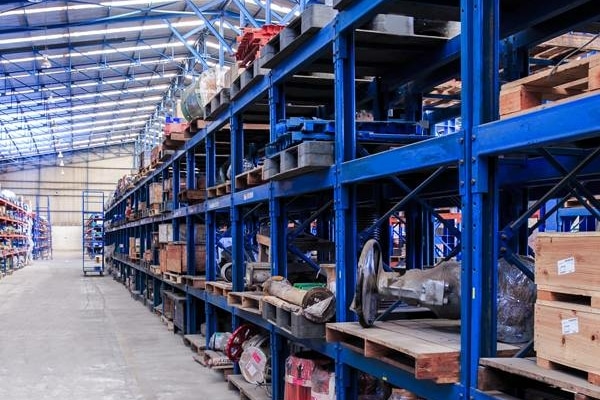
    Racking Uprights | MCRS - Midland Cold Rolled Sections

    Lead times will vary depending on the requirements of individual projects; however, MCRS endeavours to heed the time restraints of our clients’ projects where possible.

    After an in-depth design consultation, the engineers at MCRS work with clients to determine the best material type for each individual application.

    MCRS forms both ferrous and non-ferrous metallic materials, in addition to coated and high strength metals, whilst adhering to tolerances under 0.5mm per dimension.

    You can enquire with MCRS about Racking Uprights by clicking here to contact us.

    FAQ's

    What’s the difference between racking and shelving?

    Though the terms racking and shelving are often used interchangeably, racking refers to industrial shelving; this means racking is often much larger, made from heavy duty metals, and is typically accessed by retrieval machinery, such as forklifts, only.

    Racking may be used for larger quantities of stock, or for larger and heavier stock.

    What are the different types of racking?

    There are various types of racking, which utilise different storage and retrieval methods. Selective racking, drive in racking, and carton flow racking are examples of different racking systems.

    Selective racking is used for storing goods which are accessed frequently; with this system, stock can be picked freely.

    Drive-in racking allows for a forklift to access the pallets directly, from the side of the aisle; this system enables a first in, last out stock method.

    The popular carton flow rack sits on a slight incline so as to allow a first in, first out stock method. The incline enables stock to move forward on a pulley system or roller when stock at the front is removed.

    What industries use racking?

    Racking uprights are used across multiple industries for storage.
    In the retail industry, racking lets retailers store their goods and display them for sale in a safe and secure way.
    Racking is also popular in the food and drink industry, where it is often used for storing goods in warehouses. The height of the racking can be adjusted to suit the products being stored, and it can be quickly adapted to changes in stock levels.

    Manufacturing racking is used to store raw materials and components, which makes them easier to access. This system of storage enables manufacturers to locate specific parts quickly and use machinery to access the stock. It also helps with stock control by keeping an accurate record of the quantities of goods held at any one time.