
Yacht Fenders

Iso 9001 Logo

Informed by decades of experience, and an unwavering dedication towards our industry, MCRS have developed the expertise and skill which has seen our rapid expansion as manufacturers of cold formed steel sections.

Our manufacturing capacity is committed to the production of close tolerance profiles, and when combined with the value we place on aestheticism, MCRS can deliver premium bespoke yacht fenders for the maritime industry.

From the outset of this process, MCRS strives to determine the unique difficulties our clients face, maintaining attentive levels of customer support to fully address and resolve these issues through the design and manufacturing of our cold formed sections.

Roll forming offers a linear process for the economic production of complete and consistent yacht fender sections. MCRS utilises up to 30 roll stands for the production of our cold formed yacht fender sections, working with and delivering:

Material thickness from 0.3mm to 6.0mm
Strip widths up to 450mm
In-line piercing facility
In-line roll logo marking
In-line inkjet marking

Got a question?
Talk to the experts today, get the support that speaks your language...


    Yacht Fenders Manufacturing Service
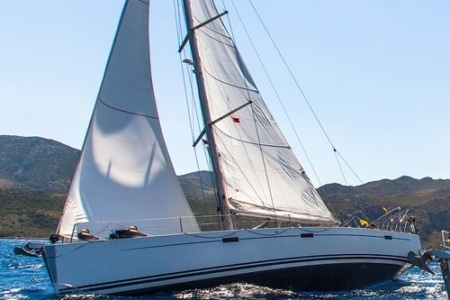
    Yacht Fenders | MCRS - midland Cold Rolled Sections: Yacht Fenders Manufacturing Service

    To achieve the look and durability necessary for a yacht fender, MCRS manufactures ferrous and non-ferrous, coated, and high strength metallic materials. Material choice will be carefully considered by our engineers, alongside specifications established during consultation briefs, for the optimum performance of the product.

    The bespoke nature of each yacht fender means lead times will vary, although MCRS will always take into consideration clients’ project timescales, working within agreed timescales.

    FAQ's

    What’s the purpose of a yacht fender?

    A yacht fender has several purposes.

    Similar to an inflatable and detachable fender, a yacht rub rail primarily protects the boat from external objects which may damage it; this includes surfaces such as a sea wall or another boat. Unlike an inflatable fender, however, a rub rail is for the most part permanently attached to the boat, though it can be removed for replacement or maintenance. This can additionally improve the look of a yacht.

    Furthermore, the rub rail contributes towards the design of a yacht - covering the joint between the deck and hull of the boat.

    For this reason, a yacht rub rail must be both durable and visually appealing.

    Do yacht fenders need replacing?

    Yacht fenders will require replacement eventually - due to the exposure of fenders, or rub rails, to harsh and wet conditions they can deteriorate or become grimy. This will begin to affect the look of your boat, as well as how effectively the fender can carry out its role in protecting the boat. When it is no longer fit for its application, the rub rail will need replacing in order to best protect your boat.

    Installation of a new rub rail does not have to be carried out by a professional, however for the best fit and finish this may be preferable.

    What materials can a fender profile be made out of?

    The material used for your yacht fender or rub rail depends on the function of the component. A fender section is made out of both an inner insert and an external covering.

    Generally speaking, the insert will be made of rubber or PVC, whilst the body is made from aluminium, stainless steel, or PVC. Aluminium, stainless steel, and PVC all have good durability and corrosion resistance - choosing which type of material you use for your yacht fendering will depend on the look you wish to achieve.