Roll Forming Processes

Iso 9001 Logo

Our Roll Forming Processes

MCRS’ dedication to providing solutions for our customers’ unique problems begins with establishing an open and ongoing communication. We endeavour to understand the issues our customers face, re-thinking and re-engineering products to overcome these challenges.

Our roll forming processes have grown in line with this, with our manufacturing capacity and engineering team committed to producing cold rolled sections perfectly formed to their customers exacting needs.

Our close relationships with clients have enabled MCRS to rapidly expand, offering in-depth knowledge which supports our delivery of close tolerance profiles every time.

MCRS utilises up to 30 roll stands to form complex profiles in reflection of custom designs. Our roll forming capabilities include:

Material thickness from 0.3mm to 6.0mm
Strip widths up to 450mm
In-line piercing facility
In-line roll logo marking
In-line inkjet marking

Got a question?
Talk to the experts today, get the support that speaks your language...


    MCRS are specialists in the cold roll forming processes
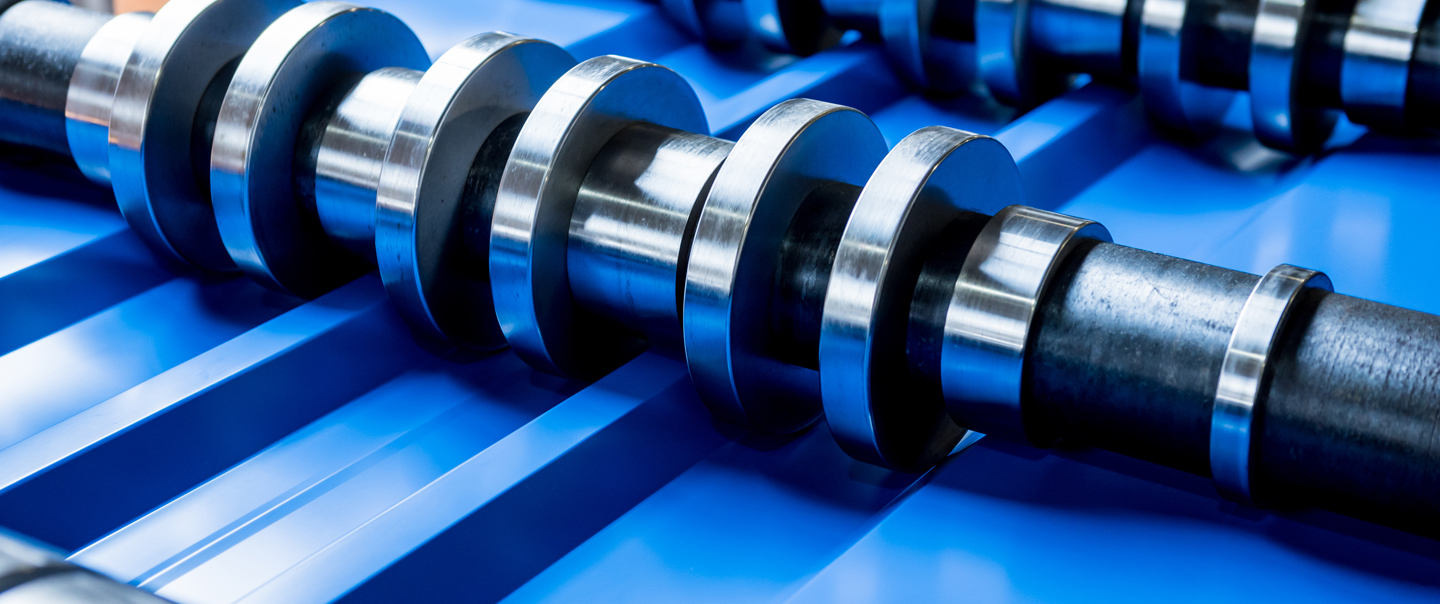
    roll forming processes

    MCRS works with both ferrous and non-ferrous, coated, and high strength metallic materials; the material used will be dictated by our engineers’ precise calculations, determined in line with customers’ specifications and requirements.

    Lead times for the manufacturing of your bespoke products may vary but we will always aim to accommodate our clients’ needs, aiming to work within agreed project timescales where possible.

    MCRS caters to a range of industries and markets. Our engineering services have already been utilised for projects in the following sectors:

    Marine
    Automotive
    Agricultural
    Construction
    Heavy gauge applications
    Retail

    FAQ's

    What is roll forming?

    Roll forming is a continuous metal forming process in which sheet or strip metal is passed through a series of shaped rolls to produce a desired profile. With roll forming, it is possible to produce many different profiles by simply altering the dimensions of the rolls used. Generally speaking, the more passes used, the greater capability of the machine to produce a more complex profile from the metal whilst adhering to tight tolerances of under 0.5mm per dimension.

    What is the cold roll forming process?

    Cold roll forming is only one step within the complete roll forming process, from which an end product can be created by using complementary processes where necessary. Firstly, a metal strip is fed onto the line, which will then continuously feed through the process; before being straightened or leveled, the strip must be uncoiled as they are fed onto the line.

    If necessary, the metal is then pierced by punching holes or slits into the metal with a piercing tool.

    Rolls are then used to gradually form the flat metal strip into its designed profile, using increasingly more defined rolls to form the metal without compromising the material or forming roll.

    Finally, cut-off tooling is used to cut the continuous metal profile into the correct length as it passes through.

    What are the different types of forming processes?

    There are several different ways to form metal parts and profiles; the most common processes include rolling, extrusion, die forming, and forging.

    In rolling, a piece of metal is passed between two rollers, which deform it into a thinner sheet. Roll forming consists of having shaped rolls or dies which bend the metal as it passes through. This is similar to a hot forming process, but generally used for different applications.

    Extrusion is a process where a metal billet (often aluminium, but also occasionally titanium) is forced through a die to create a desired profile. The billet is placed in the die and then compressed, pushing it through the die which shapes it; extrusion makes use of heat and considerable pressure to shape the metal.

    During die forming the metal is pressed onto a die, which consequently shapes it.

    Forging is a process where metal is heated until it's soft enough to be shaped with a hammer or press. Forging is used to make parts with complex shapes that can't be made with other processes. This may also be done cold, though cold forging is less common.